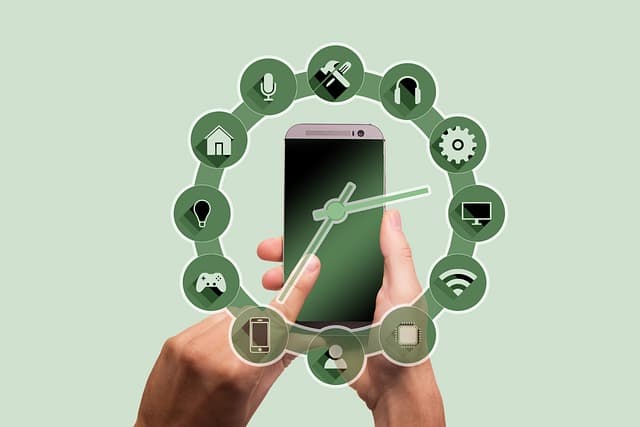
Not long ago, smart home systems seemed like something extraordinary. Today, however, the situation has changed, and the technology has become a common feature of modern life. The implementation of the system makes it possible to turn a typical home into a “smart” one. Moreover, this does not require serious technical knowledge or major renovation work.
What is the system?
A smart home is a high-tech system that allows you to fully automate all household processes. Within its framework, existing communications are combined into a single whole and controlled using artificial intelligence. It can be configured and programmed according to one or more scenarios, and the main task of a “smart home” is to ensure the safety and comfort of its users.
The complex includes a large number of interconnected home devices. All of them have their own controls, are equipped with sensors and detectors, and have mechanisms for data exchange. This approach ensures the maximum level of automation of all processes required by the user.
Our innovative home is capable of more than just carrying out direct commands from the owner. It can adapt to the owner’s habits and respond to certain situations in accordance with the scenarios programmed into it. It is not necessary to install all the equipment at once. The system can be installed in stages, with the option of expansion and further modernization.
System capabilities and advantages
The use of “Smart Home” technology in an apartment has virtually unlimited possibilities. The main functions of the system are as follows:
- Setting and controlling the optimal temperature;
- Setting automatic lighting for different times of the day;
- Controlling additional heating systems;
- Monitoring the operation of household appliances and engineering systems;
- Interaction with multimedia equipment;
- Prevention of gas and water leaks;
- Simulating the presence of the owner when they are away from home;
- Comprehensive security and much more.
Active use of technological devices has a number of advantages:
- Increased comfort. Optimal temperature, humidity level, and ventilation. With proper design and configuration, nothing is impossible for a home with “smart” features.
- Safety factor. Now you can entrust the care of your own life to automation. Modern technologies enable your home not only to independently prevent virtually any emergency situation, but also to minimize potential damage by taking the necessary measures.
- Ease of interaction. Technological systems are easy to set up and control. The simple interface requires no learning curve, and its intuitive format allows you to use the available features without restrictions.
- The list of advantages of the system is completed by its cost-effectiveness. The rational use of household appliances makes it possible to reduce electricity costs by 20-60%. And all this without the slightest discomfort for people or equipment.
Main elements of the system
Any smart home includes the following modules:
- Controller. The main element that unites all other blocks into a single whole. It is the controller that evaluates the operation of the components, takes into account the environmental conditions, and distributes the appropriate commands to individual devices.
- Sensors. Devices that receive data about the state of the equipment and what is happening around it. The information is then transmitted to the controller. Based on this information, certain actions are performed;
- Actuators. These modules are responsible for automating home processes and executing the commands received. Such devices include relays, LED blocks, and dimmers.
Various controller programming technologies are used. You can set up a scenario for turning on the lights in a specific room at a specific time. You can program the air conditioner to turn on when the temperature rises above a certain level. Or you can complicate the task and set several actions to be performed simultaneously. At the user’s request, the system will close the front door, lower the blinds, turn on the music, and execute any other commands.
Additional elements
Our smart homes are not limited to just the basic elements. There are subsystems designed to expand their functionality. First and foremost, these include lighting, climate control, home theater, sun protection, and security.
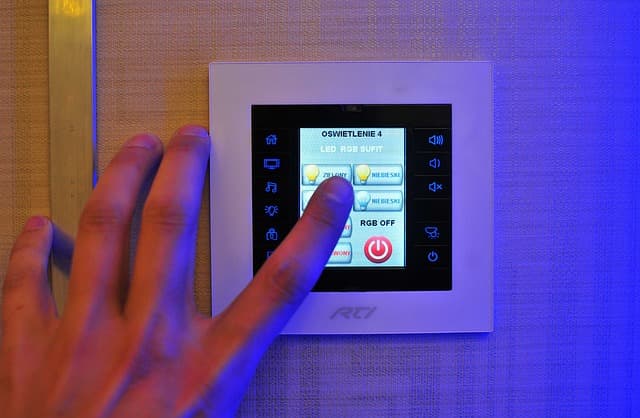
The introduction of innovative technologies in lighting allows for flexible adjustment of lighting device parameters. Not only can they be turned on and off at the owner’s discretion, but the intensity of the light can also be changed. Remote switching on of lights and selection of different operating modes depending on the time of day are available.
Sun protection in a home with smart technologies provides trouble-free control of electrically operated sun protection devices. These can be curtains, blinds, awnings, and so on. One push of a button is enough to immediately create the desired lighting in the room.
Climate control allows you to monitor the temperature and air quality in the room, even when the owner is not at home. Remote control and climate control equipment operation according to one of the preset scenarios are available.